
Hours Calculator: Add Up Work Hours and Pay
Type your start and end times for each day, subtract unpaid breaks, and this hours calculator totals your week in both hours:minutes and decimal hours. Add your hourly rate to see regular pay, overtime and gross weekly earnings.
Weekly time card
How to Use This Hours Calculator
- Enter start and end times for each day you worked. Leave days off blank.
- Add unpaid break minutes, such as a 30-minute lunch.
- Set your hourly rate and overtime rule. The default is time and a half after 40 hours a week.
- Read your totals in hours and minutes, decimal hours for payroll, and gross pay.
The hours calculator recalculates as you type. Overnight shifts, like 10:00 PM to 6:00 AM, are handled automatically.
How to Calculate Hours Worked by Hand
- Convert both times to a 24-hour clock: 5:30 PM becomes 17:30.
- Subtract the start time from the end time: 17:30 − 9:00 = 8 hours 30 minutes.
- Subtract unpaid breaks: 8:30 − 0:30 = 8:00 hours.
- If the end time is earlier than the start time, the shift crossed midnight, so add 24 hours before subtracting.
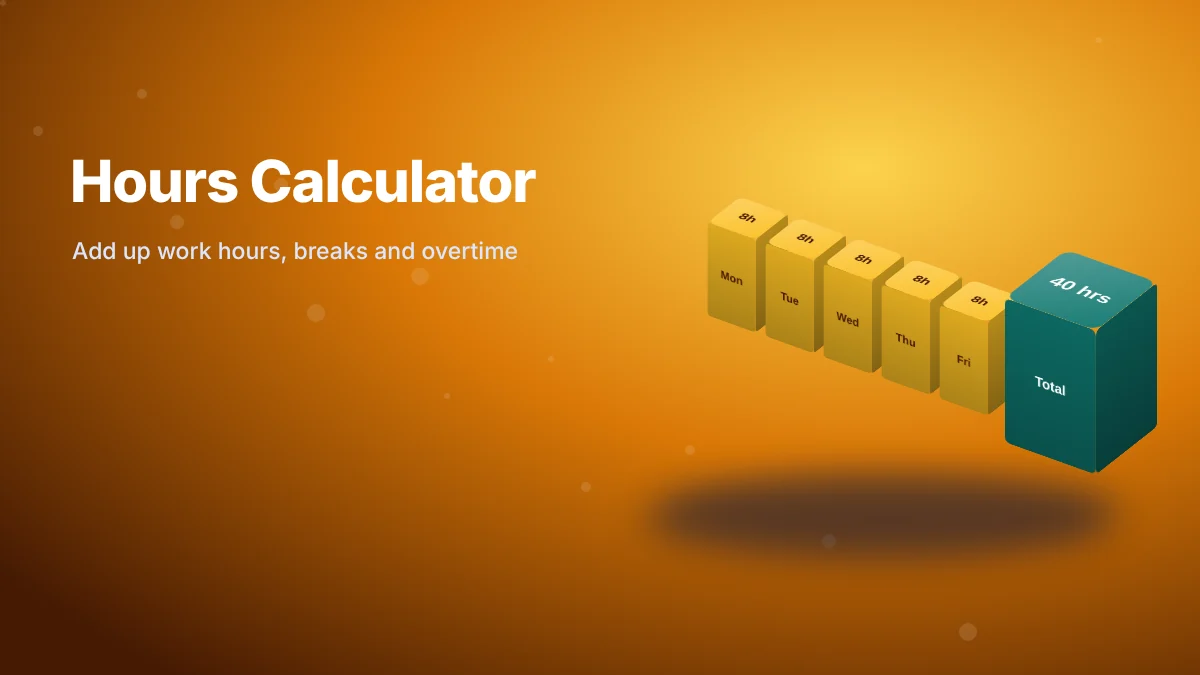
- Add up every day for your weekly total.
Our work hours calculator does each of these steps for you, removing the most common time card mistakes.
Converting Minutes to Decimal Hours
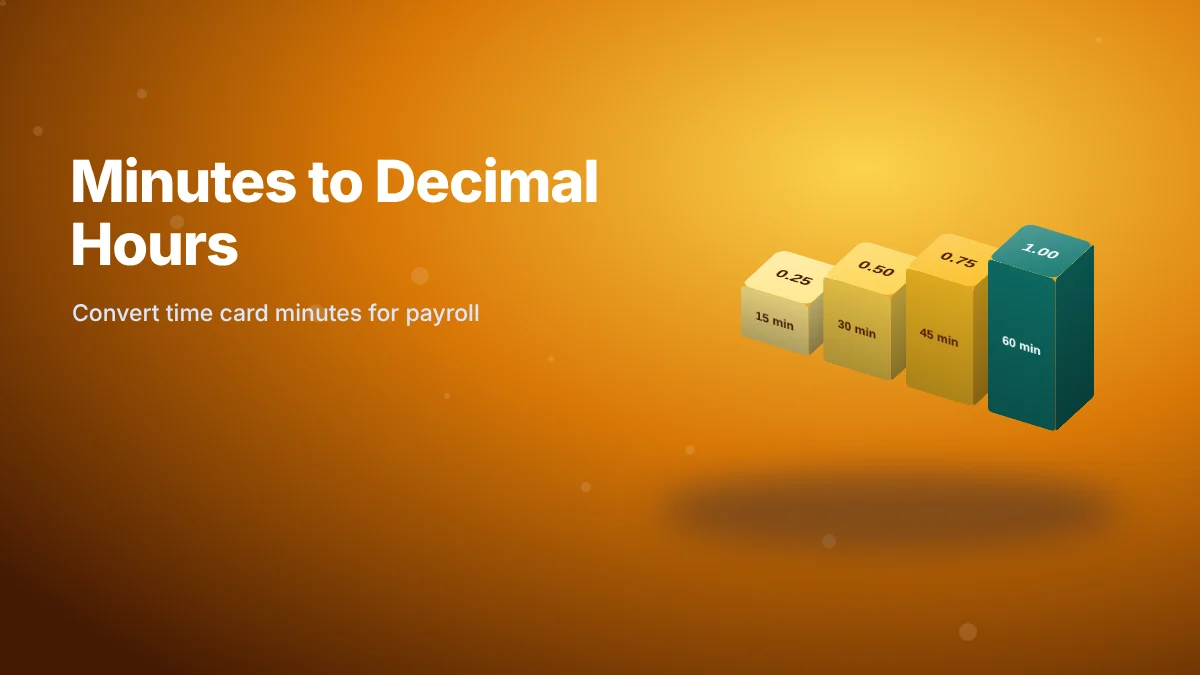
Payroll systems usually need decimal hours, not hours and minutes. Divide minutes by 60:
| Minutes | Decimal | Minutes | Decimal |
|---|---|---|---|
| 5 | 0.08 | 35 | 0.58 |
| 10 | 0.17 | 40 | 0.67 |
| 15 | 0.25 | 45 | 0.75 |
| 20 | 0.33 | 50 | 0.83 |
| 25 | 0.42 | 55 | 0.92 |
| 30 | 0.50 | 60 | 1.00 |
So 7 hours 45 minutes is 7.75 hours, not 7.45. Mixing up those two formats is one of the most frequent payroll errors.
How Overtime Is Calculated
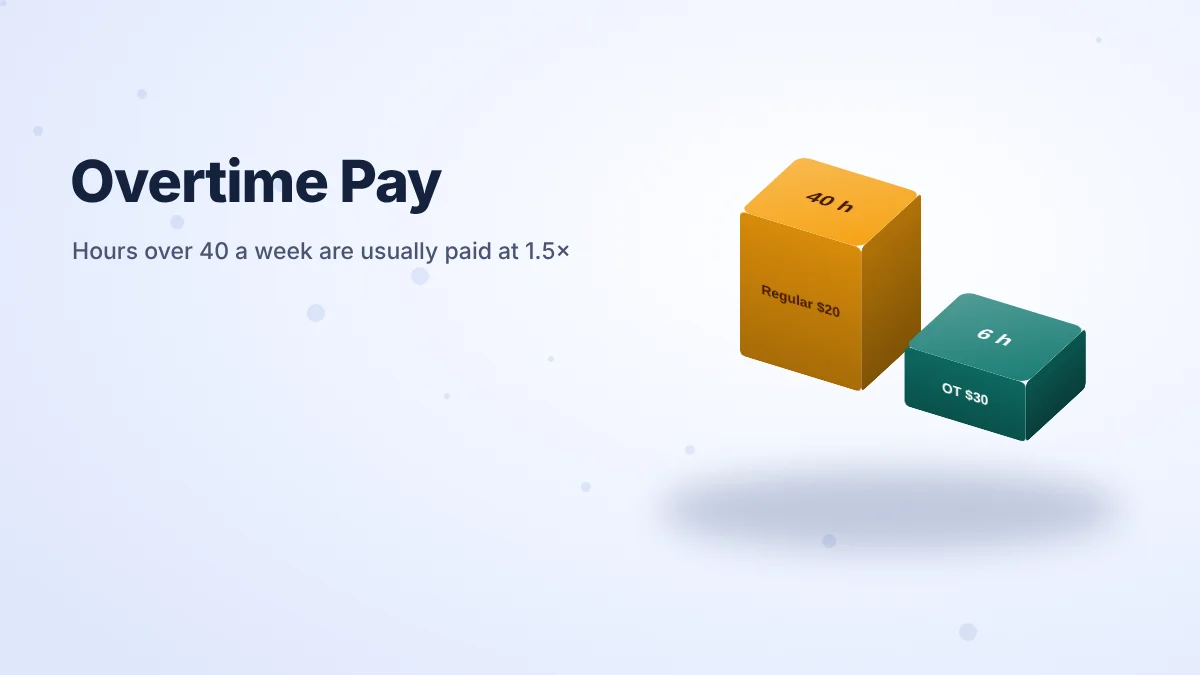
Under the federal Fair Labor Standards Act (FLSA), non-exempt employees must be paid at least 1.5 times their regular rate for hours over 40 in a workweek. At $20 an hour, a 46-hour week pays:
- 40 regular hours × $20 = $800
- 6 overtime hours × $30 = $180
- Total gross pay: $980
Some states have stricter rules. California, for example, also requires daily overtime after 8 hours and double time after 12 hours in a day. Set the “Overtime after” box and multiplier to match your situation. Salaried exempt employees usually aren’t eligible for overtime at all.
Who Uses an Hours Worked Calculator?
Hourly employees
Double-check your paycheck and catch missing hours or overtime.
Freelancers
Total billable hours for client invoices.
Small businesses
Turn paper time cards into accurate payroll hours.
Time Tracking Tips
- Record times as you go, not from memory at the end of the week.
- Know your break rules: short rest breaks of 5 to 20 minutes are usually paid, while meal breaks of 30 minutes or more are often unpaid.
- Keep your own copy of time records in case of a pay dispute.
- Rounding: employers may round to the nearest 5, 6 or 15 minutes only if it evens out over time and doesn’t consistently underpay.
Planning ahead with your paycheck? See how regular savings grow with our 401(k) savings calculator.
Note: this hours calculator estimates gross pay before taxes and deductions. Overtime laws vary by state and job type, so check with your employer or your state labor department for the rules that apply to you.
Hours Calculator FAQs
How many hours did I work from 9 to 5?
9:00 AM to 5:00 PM is 8 hours. Subtract any unpaid lunch break, so with a 30-minute lunch you worked 7.5 hours.
How do I calculate hours worked in a week?
Calculate each day’s hours (end minus start minus breaks), then add the days together. Enter your times in the hours calculator above to do it instantly.
How do I convert minutes to decimal hours?
Divide the minutes by 60. For example, 20 minutes ÷ 60 = 0.33 hours.
Does the calculator handle overnight shifts?
Yes. If your end time is earlier than your start time, the shift is treated as crossing midnight and calculated correctly.
When does overtime start?
Federal law requires overtime after 40 hours in a workweek for most hourly workers. Some states, including California, also have daily overtime rules.