
Macro Calculator: Your Daily Protein, Carbs and Fat
Enter your daily calorie target and choose a diet style. This macro calculator converts your calories into grams of protein, carbohydrates and fat, splits them across your meals, and checks your protein against your body weight.
Your targets
Not sure how many calories you need? Get your maintenance number from our TDEE calculator first.
| Per meal | Protein | Carbs | Fat | Calories |
|---|
How to Use the Macro Calculator
- Enter your daily calories. Use your maintenance calories, or subtract about 300 to 500 for fat loss. Our TDEE calculator estimates your maintenance level.
- Add your body weight so the macro calculator can check whether your protein is high enough.
- Pick a diet style, or choose Custom and enter your own percentages.
- Choose meals per day to see grams for each meal, which makes meal prep far easier.
What Are Macros?
“Macros” is short for macronutrients, the three nutrients your body needs in large amounts and that supply calories:

Protein · 4 kcal/g
Builds and repairs muscle, keeps you full, and has the highest thermic effect. Sources include chicken, fish, eggs, Greek yogurt, tofu and lentils.
Carbs · 4 kcal/g
Your main fuel for exercise and the brain. Sources include rice, oats, potatoes, fruit and whole grains.
Fat · 9 kcal/g
Supports hormones and vitamin absorption. Sources include olive oil, nuts, avocado and salmon.
How to Calculate Macros by Hand
- Pick a calorie target, for example 2,000 kcal.
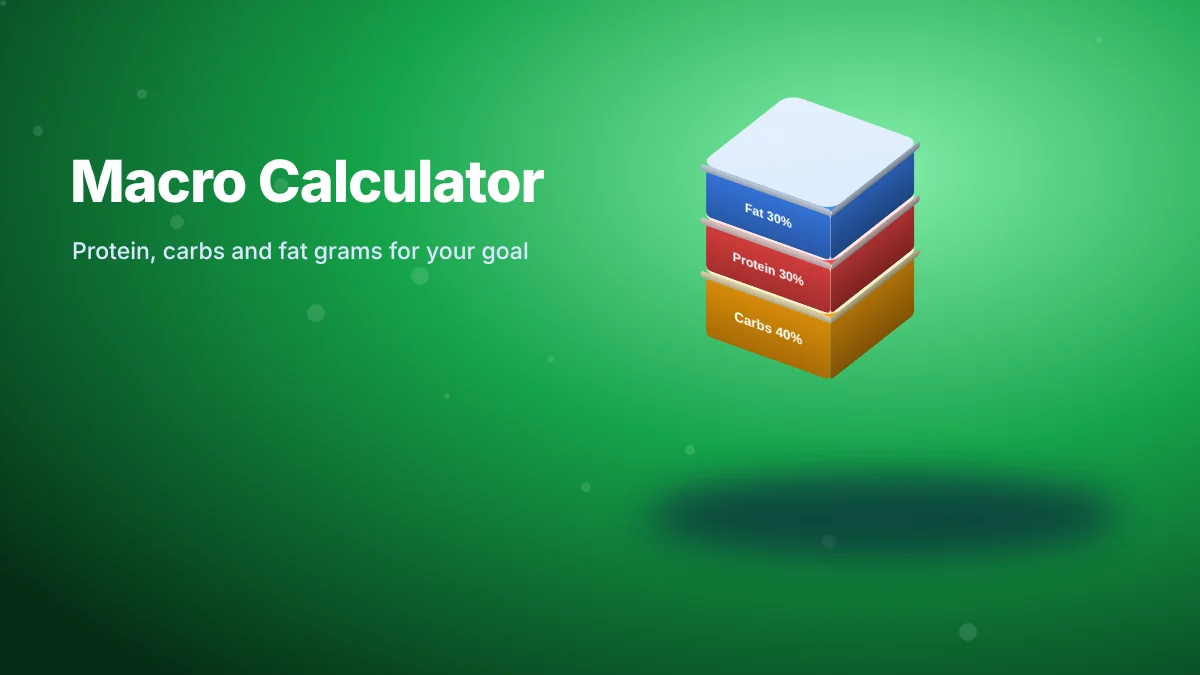
- Choose a split, for example 30% protein, 40% carbs and 30% fat.
- Multiply calories by each percentage: 600 kcal protein, 800 kcal carbs, 600 kcal fat.
- Divide by calories per gram: 600 ÷ 4 = 150 g protein, 800 ÷ 4 = 200 g carbs, 600 ÷ 9 = 67 g fat.
The free macro calculator above does this instantly for any calorie level and split.
Which Macro Split Should You Choose?

| Diet style | P / C / F | Best for |
|---|---|---|
| Balanced | 30 / 40 / 30 | General health and most beginners |
| High protein | 40 / 30 / 30 | Fat loss while keeping muscle |
| Low carb | 40 / 20 / 40 | People who prefer fewer starches |
| Keto | 25 / 5 / 70 | Very low-carb ketogenic eating |
| Endurance | 20 / 55 / 25 | Runners, cyclists and high training volume |
Research consistently shows that total calories and adequate protein matter most for body composition. The best split is the one you can stick to.
Macro Calculator for Weight Loss
- Create a modest calorie deficit of about 300 to 500 kcal below maintenance.
- Keep protein high: roughly 1.6 to 2.2 g per kg (0.7 to 1 g per lb) helps preserve muscle while dieting.
- Fill the rest with carbs and fat to suit your preferences and training.
- Don’t drop fat too low: staying above about 20% of calories supports hormone health.
Tips for Tracking Macros
- Use a food scale for the first few weeks. Eyeballing portions is usually way off.
- Log food before you eat it so you can adjust the rest of the day.
- Hit protein first, then let carbs and fat land within about 5 to 10 g of target.
- Re-run the macro calculator whenever your weight or goal changes.
Health disclaimer: this macro calculator gives general nutrition estimates for healthy adults and isn’t medical advice. People with diabetes, kidney disease or other conditions, and anyone who is pregnant, should get personal guidance from a doctor or registered dietitian.
Macro Calculator FAQs
How do I calculate my macros?
Multiply your daily calories by each macro percentage, then divide protein and carbs by 4 and fat by 9 to get grams. The macro calculator above does it automatically.
How much protein do I need per day?
Active adults generally do well with about 1.2 to 2.0 g per kg of body weight. Many lifters target around 0.7 to 1 g per pound.
What’s the best macro ratio for weight loss?
A higher-protein split such as 40/30/30 within a calorie deficit works well for many people, because it keeps you full and helps protect muscle.
Do I need to hit my macros exactly?
No. Getting within about 5 to 10 grams of each target on most days is plenty. Consistency over weeks matters more than perfect days.
Is this macro calculator free?
Yes. It’s 100% free with no sign-up, and nothing you enter is stored.